Best Secure Notes & Private Diary Apps 2026 — Android & iPhone

A secure notes app should protect the words inside your notes, not just hide an icon. This guide compares built-in locks, encrypted note apps, private diaries, secure folders, and practical recovery choices on Android and iPhone.

By the Private Notes Desk editorial team Updated July 19, 2026 Evidence checked against platform documentation
0Protection methods
0Privacy checks
0Mobile platforms
0Content types

Secure notes, photo vaults, and Android-to-iPhone transfers at a glance

01

Nimbus Notes security and privacy: what should journal users verify?

Do not judge any journal app by biometric unlock alone. Biometrics can make opening the app convenient, but the more important questions are whether note content is encrypted before sync, who controls the encryption keys, what metadata remains visible, how exports work, and what happens when you lose the password.

Nimbus Note has historically been positioned as a productivity and collaboration workspace rather than a privacy-first diary. Product names, ownership, plans, and privacy documentation can change, so verify the current service, its encryption model, and its biometric behavior on iOS and Android before storing a sensitive journal. For highly confidential entries, prefer a provider that clearly documents end-to-end encryption and independent security practices.

Useful test: create a harmless sample note, lock the app, restart the phone, inspect notifications and recent-app previews, then sign in on another device. This reveals more than a marketing label.
02

Best secure photo and video lock apps on Android and iOS

Start with the platform’s protected storage when it meets your needs. Google Photos Locked Folder, Samsung Secure Folder, Android Private Space, and the iPhone Hidden album can reduce casual exposure. A dedicated media vault adds a separate lock and organization, but you must inspect backup, export, deletion, and recovery behavior before trusting it.

See the photo and video protection checklist →

03

Best apps to transfer files from Android to iPhone

For a new iPhone, Apple’s Move to iOS is usually the safest starting point because it is built for migration. For individual files after setup, use a reputable cloud provider, encrypted local transfer, or a computer as an intermediary. Do not move locked-vault data until you have exported it through the original app and confirmed that the destination preserves the intended protection.

Secure Android-to-iPhone file transfer without exposing account passwords

Read the secure transfer workflow →

Find the right part of the guide

What are you trying to do?

Start with the four protection methods, then use the platform selector for Android or iPhone instructions.

What a secure notes app should protect

A secure notes app creates an additional boundary around sensitive writing such as recovery codes, health notes, financial reminders, private diaries, work ideas, or family information. The strength of that boundary depends on more than a PIN screen.

At minimum, a well-designed private notes app should encrypt stored content, limit information shown in notifications and app previews, lock again after inactivity or a phone restart, and explain recovery plainly. A cloud-synced app should also state whether the provider can decrypt your notes and how new devices are authorized.

Encryption, access control, and concealment are different

Encryption transforms data so it cannot be read without the right key. Access control decides who can open the app or note. Concealment hides an icon, album, or folder from casual view. A strong setup can use all three, but hiding alone is not encryption.

Who this guide is for

This guide is for people who want a private diary app on Android or iPhone, need encrypted notes across devices, want to protect photos alongside notes, or are comparing app locks with Samsung Secure Folder, Android Private Space, and iPhone’s built-in protections.

Illustration of encrypted secure notes protected behind layered mobile security controls
Do not store your only copy of a critical password or recovery phrase in a vault you have never tested. Keep a separate, protected recovery method and confirm that exports or backups work before adding irreplaceable information.

Choose protection based on what could go wrong

The best method depends on whether you fear casual snooping, phone theft, a compromised cloud account, accidental deletion, or losing your own password.

I share my phone

Use a strong screen lock plus a separate note, app, or secure-folder lock. Disable sensitive notification previews and recent-app snapshots.

I sync a private journal

Prioritize documented end-to-end encryption, clear device authorization, version history, reliable export, and a recovery model you understand.

I keep mixed private media

A dedicated vault or secure folder is easier when entries include photographs, voice recordings, scans, and personal documents.

Private vault reminder settings for a protected to-do entry with time and date controls
Choose a situation to see the most suitable starting point.

Four practical ways to protect notes, diaries, and journals

Each approach solves a different part of the problem. The most secure setup often combines a strong phone lock with encrypted note storage and a tested recovery plan.

Method 1

Use the built-in note lock on iPhone

Setup
Security
Portability
About 2 minutes No extra app Best for Apple users

Apple Notes can lock supported notes using the iPhone passcode or a separate Notes password. Face ID or Touch ID can make access faster, but the passcode or custom password remains the underlying credential.

Apple Notes lock interface demonstrating protected notes on iPhone
  1. Choose your password model. In Notes settings, decide whether to use the device passcode or a custom Notes password. A custom password creates separation but adds recovery risk.
  2. Open a supported note. Use the note menu to choose Lock, then authenticate.
  3. Close the lock after reading. Do not assume leaving the note screen closes access immediately. Use the lock control and test the behavior yourself.
  4. Inspect what remains visible. A locked note’s title can still be visible, so avoid sensitive titles.
AdvantagesIntegrated with iPhone, simple for occasional protected notes, no separate account required when using the device passcode.
LimitationsSome note types and attachments cannot be locked. A forgotten older custom password may leave older notes inaccessible even after resetting the password.
Method 2

Choose an end-to-end encrypted notes app

Setup
Security
Portability
About 5–10 minutes Cross-device Best for synced journals

An encrypted notes app is the strongest fit when you need Android, iPhone, desktop, and web access without giving the service provider routine access to note content. Look for a published encryption design, independent audits, secure key derivation, and explicit new-device authorization.

  1. Read the security documentation. Confirm that note content is end-to-end encrypted, not merely encrypted while travelling to the server.
  2. Create a unique account password. Use a password manager and enable a second factor when offered.
  3. Test a second device. Observe how the app authorizes it and whether an email account alone can reset access.
  4. Export a harmless sample. Make sure you can leave the service without losing all formatting or attachments.
AdvantagesStrong sync privacy, cross-platform access, and better separation from device ecosystems when implemented correctly.
LimitationsSome advanced editors, attachments, collaboration tools, or backups may require a paid plan. Strong zero-knowledge designs can make forgotten passwords harder to recover.
Method 3

Use Samsung Secure Folder or Android Private Space

Setup
Security
Portability
About 5 minutes Device-level separation Best for multiple private apps

Samsung Secure Folder creates a protected environment for apps and files on supported Galaxy devices. Android Private Space, available on supported Android 15 and later devices, creates a separate area with its own lock and can hide that space while locked.

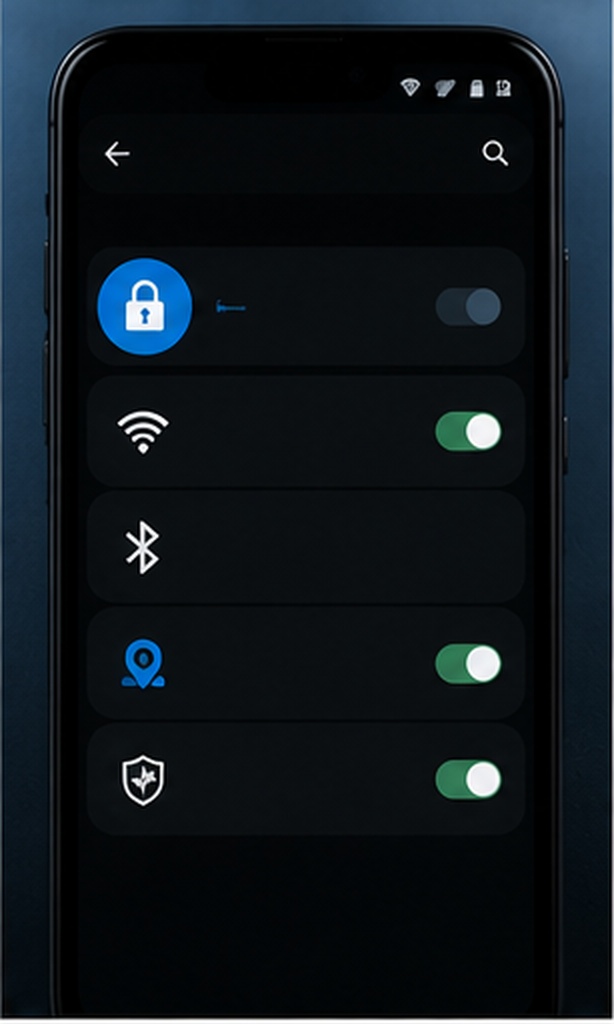
Android security settings used to configure protected spaces and device privacy controls
  1. Open the official security setting. On Samsung, search Settings for Secure Folder. On supported Android, open Security & privacy and select Private Space.
  2. Choose a separate credential. A different PIN or password provides better separation than reusing the phone credential.
  3. Add or install the note app inside. A copied app can maintain separate data from the copy outside the protected space.
  4. Configure auto-lock and visibility. Decide when the space locks and whether its icon or container appears while locked.
AdvantagesProtects several apps and file types together, separates accounts, and reduces exposure in the normal app drawer.
LimitationsAvailability and behavior depend on device and OS version. Private Space data can be deleted with the space and may not restore through normal device backup.
Method 4

Use a dedicated secure notes or diary vault

Setup
Security
Portability
About 3–7 minutes Separate app lock Best for notes plus media

A dedicated vault focuses on keeping private notes behind a separate PIN, password, pattern, or biometric gate. Some vaults also support photographs, voice recordings, reminders, calendars, decoy modes, or local backup.

  1. Verify the developer and store listing. Review update history, privacy disclosures, permissions, and support options.
  2. Set a unique master credential. Do not reuse your screen-lock PIN or banking PIN.
  3. Disable previews. Check notification text, widgets, recent-app cards, keyboard learning, and share-sheet history.
  4. Test export and recovery. Confirm how you retrieve your own data before storing anything irreplaceable.
AdvantagesSimple private-note workflow, media attachments, flexible lock types, and clearer separation from an everyday notes app.
LimitationsSecurity quality varies widely. Some apps have unclear cryptography, weak recovery questions, aggressive ads, old releases, or incomplete privacy disclosures.

Secure notes on Android

Android protection varies by manufacturer. Start with a strong device credential, Private Space on supported Android 15+ devices, Samsung Secure Folder on supported Galaxy devices, or an end-to-end encrypted notes app. Then disable lock-screen notification content and test restart behavior.

Biometric vs PIN vs pattern vs password

Biometrics improve convenience, but they usually unlock a credential-backed system. Security depends on the fallback credential, retry limits, timeout behavior, and whether the app protects data at rest.

Calculator Vault pattern authentication screen showing a drawn mobile unlock pattern
MethodBest qualityMain weaknessPractical advice
Fingerprint or faceFast, resists shoulder-surfing, encourages frequent relockingFalls back to a PIN/password and may be compelled or presented while you are asleepUse with a strong fallback and require the credential after restart
PINFast and easy to enterShort PINs are observable and easily reusedUse at least six random digits and never reuse a banking PIN
PatternQuick on AndroidSmudge traces and observation can reveal it; the pattern space is often used poorlyAvoid simple shapes and disable visible trails where available
PasswordLargest possible secret spaceSlower on mobile and vulnerable to reuseUse a unique passphrase stored in a password manager
Biometric spoofing risk: reputable phones use liveness checks, secure hardware, and retry limits, but no biometric is a secret you can change. A strong PIN or password remains essential because it is the fallback after restart, lockout, or sensor failure.

Run a mobile privacy audit before trusting any lock

Mobile privacy settings audit checklist

Check each control after verifying it on your phone. The counter updates automatically, and the list can be printed or saved as a text file.

0 of 10 completed

Phone privacy score quiz

Answer all ten questions. This is a practical audit, not a formal security certification.

1. Is your screen credential six digits or stronger?
2. Are lock-screen notification previews hidden?
3. Does your notes app relock automatically?
4. Have you tested protection after restart?
5. Do you understand the app’s encryption model?
6. Is your notes password unique?
7. Have you reviewed signed-in devices?
8. Is recovery information stored separately?
9. Have you tested an export or backup?
10. Are unused app permissions removed?
Complete the ten questions to see your result.

Secure folder vs app lock: which boundary do you need?

CapabilityRegular folderApp lockSecure folder or private space
Hides ordinary files
Locks an individual app
Runs a separate copy of an app
Separates accounts and app data
Encrypts note content end to end Depends on the note app
Cross-device accessDepends on storageDepends on appUsually limited or device-specific
Secure folder synchronization concept showing protected mobile data moving between trusted locations

A secure folder protects an environment. An encrypted notes app protects note content and sync. They can complement each other, but neither automatically replaces the other.

Protect banking apps, family devices, and hidden apps without creating false confidence

Banking and financial apps

Use the bank’s own controls first

Enable the bank’s biometric or credential lock, transaction alerts, device registration, and multi-factor authentication. A third-party app lock can reduce casual access but should not be treated as protection against a compromised phone.

  • DoUse a unique banking password and a protected email account.
  • Do notStore the banking PIN in a note protected by the same PIN.
  • TestRestart behavior, notification content, and account recovery.
Children and shared devices

Use parental controls rather than a secret app-lock trick

Google Family Link and Apple Screen Time are better suited to age-appropriate app limits, purchase approvals, and content restrictions. They are not encryption systems, but they are more manageable and transparent for family use.

  • Best forTime limits, age ratings, purchases, and device routines.
  • Not forProtecting a highly confidential note database from the device owner.
  • ImportantUse a parent-only account and recovery contact.
Hide apps from the home screen

Hiding reduces discovery, not forensic access

Use the phone’s official hide, Private Space, Secure Folder, App Library, or app-lock feature. Avoid launchers or vault apps that demand excessive permissions merely to conceal an icon.

  • CheckSearch, settings, notifications, recent apps, and share menus.
  • RememberAn installed app may still be visible in system settings or store history.
Restart and OS updates

Expect the primary credential after restart

Biometric access is normally unavailable until the device credential is entered after a restart. A well-built secure space should remain locked, but updates can change auto-lock, notification, and background behavior. Test again after major OS or app updates.

  • After restartOpen the app, inspect previews, and confirm the fallback credential.
  • After updateReview permissions, auto-lock, backups, and hidden-space visibility.
Security trust rating tool

Rate a protection method

Select a method to see an editorial trust rating.

Methods compared by difficulty, security, cost, and limitations

Apple Notes lock

Convenient built-in option

  • DifficultyEasy
  • SecurityGood for supported notes on a well-secured iPhone
  • CostIncluded
  • Best forSelected private notes in the Apple ecosystem
  • LimitationVisible titles, unsupported note types, and custom-password recovery risk
Android Private Space or Samsung Secure Folder

Strong app and data separation

  • DifficultyEasy to moderate
  • SecurityStrong device-level boundary when configured well
  • CostIncluded on supported devices
  • Best forMultiple private apps, files, and separate accounts
  • LimitationDevice and OS dependency; not automatically end-to-end encrypted sync
End-to-end encrypted notes app

Best for confidential cross-device sync

  • DifficultyModerate
  • SecurityPotentially excellent when the design is public and audited
  • CostFree tiers and paid plans vary
  • Best forJournals and notes across mobile and desktop
  • LimitationRecovery can be unforgiving; advanced features may cost extra
Dedicated notes vault

Best for simple private entries plus media

  • DifficultyEasy
  • SecurityVaries by developer and implementation
  • CostOften free with in-app purchases
  • Best forSeparate private diary, photos, voice notes, and reminders
  • LimitationMay have limited transparency, export, or update history
Verdict: an end-to-end encrypted notes app is the strongest general choice for confidential sync. Built-in note locks win for convenience, secure spaces win for separating several apps, and dedicated vaults win when you value a simple private workspace with mixed media.

What “device limit reached” means in a notes app

A “device limit reached” warning usually means your plan permits only a set number of active installations or synchronized clients. It is a licensing or account rule, not proof that your notes are safer or less safe.

Open the service’s account or device-management page, identify a device you no longer use, and revoke it. Before removing a current device, confirm whether unsynced local notes exist and create an export. Changing your account password may not automatically remove every session.

Keep active sync on the two devices you use most. For occasional access elsewhere, prefer a protected export or a temporary signed-in session that you explicitly revoke. Do not install unofficial modified apps to bypass a plan limit because they can expose credentials and note content.

Do not repeatedly force-sync or delete the “duplicate” copy. Export both versions, verify the account and device clock, update the app, and review version history. Contact support with timestamps and device versions, but never send your master password or decryption key.

“Encrypted in transit and at rest” may still allow the provider to decrypt server-side data. End-to-end encryption means the content is encrypted on your device and normally decrypted only on authorized devices. Even then, account email, timestamps, file sizes, and other metadata may remain visible.

Calculator Vault cloud synchronization list showing upload and download states for protected content

Notes Lock is a focused choice for private notes with media attachments

Of the options covered, we recommend Notes Lock to people who want a separate mobile space for notes, reminders, photos, voice recordings, and diary-style entries behind a password, PIN, pattern, or supported biometric control.

Its strength is a focused, easy-to-understand private-notes workflow. Its limitations matter too: platform listings and feature maturity can differ, the iOS listing shows in-app purchases, and prospective users should review current update history, privacy disclosures, backup behavior, and support before trusting it with irreplaceable data.

Password, PIN, or pattern Photo attachments Voice recordings Diary and reminder views

Notes Lock is developed by NewSoftwares.net.

Notes Lock mobile screens showing private note, calendar, reminder, and lock views

Notes Lock features in practical terms

Access controls

Password, PIN, and patternChoose a lock style that fits your threat model and typing preferences.
Biometric convenienceUse supported fingerprint or face authentication without treating biometrics as the only credential.
Auto-lock behaviorReduce exposure when you leave the app, switch tasks, or put the phone down.
Separate private workspaceKeep sensitive entries away from the everyday notes interface.

Journal tools

Private notes and diariesCreate text entries intended for personal rather than collaborative use.
Calendar organizationBrowse entries and reminders through date-based views.
RemindersAdd time-sensitive prompts while keeping their content in the private app.
Search and organizationFind entries without exposing them in the device’s general search results where supported.

Media and capture

Photo attachmentsKeep an image with the note rather than in the ordinary photo library.
Voice recordingsCapture spoken diary entries or private reminders.
Best forPeople seeking a straightforward mobile vault for mixed personal entries.
Not ideal forTeams, complex knowledge bases, or users who require a fully documented cross-platform zero-knowledge architecture.
Calculator Vault main menu organizing protected photos videos audio documents passwords tasks and notes

Standard Notes vs Obsidian encryption vs Apple Notes vs Notes Lock

These tools solve different problems. The table distinguishes privacy architecture from local organization and simple vault access.

App or methodEncryption approachSync modelBest forImportant limitation
Standard NotesEnd-to-end encrypted note content with a published security modelCross-platform account sync; current free plan advertises unlimited devicesConfidential text notes and long-term cross-device useSome editors, file features, and productivity tools require paid plans
ObsidianLocal Markdown files; encryption depends on the storage or chosen sync method. Obsidian Sync offers end-to-end encryption when configuredLocal-first, optional first-party or third-party syncPersonal knowledge bases and users who want portable filesPlugins, external sync, and unencrypted local storage can change the threat model
Apple NotesDevice and account protections, plus per-note locking for supported notesiCloud within the Apple ecosystemConvenient selected note locking on iPhone, iPad, and MacTitles remain visible; not every note type can be locked; custom-password recovery can be difficult
Notes LockDedicated application lock and private-note workspace; verify current platform documentation for cryptographic specificsPlatform and version dependentSimple private notes, reminders, photos, voice entries, and diary useLess suited to users requiring independently documented, multi-platform end-to-end encrypted knowledge management
Editorial verdict: choose Standard Notes when documented encrypted sync is the priority, Obsidian when local portable files and knowledge management matter, Apple Notes for built-in iPhone convenience, and Notes Lock for a focused mobile private-notes vault with mixed media.

How to protect private notes using Notes Lock

The exact screen names can vary by platform and version. Use this workflow to set up safely rather than rushing directly into storing sensitive material.

  1. Install from the official listing. Confirm the developer name, store publisher, requested permissions, version history, and privacy information.
  2. Create a unique lock credential. Prefer a unique passphrase or random PIN. Do not reuse the phone PIN, bank PIN, or email password.
  3. Set biometric access as convenience. Enable fingerprint or face unlock only after the fallback credential is strong and recoverable.
  4. Create a harmless test entry. Add text, a photo, and a voice note if you plan to use those features. Lock the app and inspect notifications and previews.
  5. Restart and retest. Confirm that the app remains protected and that biometrics require the primary device credential first where expected.
  6. Verify backup, export, and recovery. Keep a protected copy of irreplaceable information and document legitimate recovery steps before relying on the vault.

Free download vs optional purchases

Current store pricing and entitlements can change by platform, country, and version. The official iPhone listing shows the app as free with in-app purchases, so verify the checkout screen before paying.

Start with the free listing

Install from the official store, create test entries, inspect permissions, and evaluate the interface before moving sensitive information. Never assume “free” means all features, backup options, or ad removal are included.

Download free version →
Is it worth paying?

Pay only when a specific paid feature solves a real need, such as removing limits or enabling a capability you have tested. Compare the cost with a privacy-first encrypted notes service if secure cross-device sync is your main goal.

How secure notes work on different devices

Android secure-notes options depend on hardware and the manufacturer’s software. On supported Android 15+ devices, Private Space can isolate a notes app with a separate lock and hide the space while locked. Samsung Secure Folder offers a similar protected environment on supported Galaxy devices. Other brands may provide App Lock or Private Safe features with different capabilities.

Review notification previews, accessibility permissions, device-admin privileges, backup destinations, and battery optimization. An app lock that is repeatedly killed in the background may not enforce the behavior you expect.

Apple Notes supports per-note locking with the device passcode or a custom Notes password. Face ID and Touch ID improve convenience, but a note title remains visible and some note types cannot be locked. Newer iOS versions can require authentication to open selected apps and can hide apps, but this does not automatically change the app’s own encryption or cloud-sync model.

For a journal used on Windows or Android as well, choose a dedicated cross-platform encrypted service rather than forcing an Apple-only workflow.

After a phone restart, the operating system normally requires the primary device PIN or password before biometrics work. Secure folders and private spaces should return locked, but exact behavior depends on device and settings. Some third-party app lockers rely on background services that can be delayed after reboot or restricted by battery settings.

After every major OS update, retest app launch, split-screen, recent-app previews, notifications, sharing, accessibility permissions, auto-lock, and backups. Do not assume a setting survived merely because the app icon still appears locked.

A locked app may protect its main interface while still exposing a title, widget, notification, thumbnail, keyboard suggestion, clipboard item, share-sheet entry, cloud backup, or exported file. Test each path that matters to you.

Encryption inside an app also does not protect an unlocked screenshot, a copied excerpt, a malicious keyboard, a compromised operating system, or a recipient to whom you deliberately shared the note.

How to lock photos and videos separately from notes

Use a protected album, secure folder, private space, or dedicated media vault. Before moving originals, confirm whether the protected copy is backed up, whether deleting the original also deletes the protected copy, and whether exported files return to the ordinary photo library without protection.

iPhone hidden album privacy controls for protecting personal photos outside a notes app

How to password protect photos on Android without another app

On supported devices, use Google Photos Locked Folder, Samsung Secure Folder, Android Private Space, or the manufacturer’s built-in private safe. Built-in options reduce the need to grant a third-party vault broad photo-library access, but backup and restore behavior differs.

Secure photo and video checklist

  • Move a harmless test image first and verify where the original remains.
  • Check cloud backup status and whether the protected folder is included.
  • Inspect thumbnails in gallery search, file pickers, recent apps, and sharing screens.
  • Export one test file and confirm its location and metadata.
  • Understand what happens if you delete the secure space, uninstall the app, or change phones.

Troubleshooting secure notes, app locks, and secure folders

ProblemLikely causeOwner-safe fix
Forgot the secure notes PIN or passwordThe app uses a separate credential, or biometric access was disabled after restartTry the documented recovery flow, verify your account, locate recovery keys or license email, and contact official support. Do not use “unlocker” tools or modified apps.
Old Apple Notes remain locked after a password resetResetting a custom Notes password creates a new password but does not re-encrypt older notesUse the password that originally locked the old note, or a biometric method that was previously enabled on an authorized device. Apple cannot recover a forgotten custom password for old locked notes.
Samsung Secure Folder will not accept the lockWrong credential, biometric fallback after restart, or reset option not enabledUse the Secure Folder recovery option only if Samsung-account reset was enabled earlier. Otherwise follow Samsung support guidance and avoid clearing data, which can destroy protected content.
“Device limit reached” during syncThe free plan or account limits active devicesExport unsynced notes, sign out an old device through account settings, revoke its session, then add the new device. Upgrade only when the additional active device is genuinely needed.
App lock can be bypassed immediately after restartThe locker’s background service starts late, or battery settings restrict itUse the operating system’s built-in secure space where available, allow required background operation, update the app, and retest. Do not weaken system security to keep an untrusted locker running.
Locked notification keeps appearingSecure Folder or Private Space status notifications are enabled by the systemUse the supported notification settings for that system component. Do not disable critical security services or install notification-hiding utilities with broad access.
Notes missing after changing phonesLocal-only storage, unsynced data, unsupported backup, or a different accountKeep the old phone intact, verify the exact account, check the app’s export and migration instructions, and restore only from a verified backup. Never uninstall the old app before confirming the destination copy.
App does not lock in split-screen or recent appsThe app protects launch but not every operating-system preview pathDisable split-screen for sensitive use, hide recent-app previews where supported, shorten the relock timer, and choose a secure-space feature that isolates the whole app.
Biometric unlock stopped workingRestart, biometric enrollment change, too many failed attempts, or OS policyEnter the legitimate fallback credential, confirm biometrics in phone settings, then re-enable biometric access in the app. Never delete app data as a first step.
Cannot remove a secure folder lock safelyThe folder still contains protected apps or local-only filesExport or move owned data through the official interface, verify every destination copy, sign out sensitive accounts, then use the supported uninstall or removal option. Deleting the container may permanently delete its contents.
High-risk recovery rule: legitimate recovery proves account or device ownership and preserves evidence. This guide does not provide bypass, cracking, credential-dumping, or unauthorized access instructions.

Match the option to the person and the data

Occasional iPhone noteUse Apple Notes locking with a strong device passcode. Keep sensitive words out of the title.Notes Lock is optional when you want a separate diary interface or mixed media.
Cross-platform private journalUse a documented end-to-end encrypted notes service with reliable export.Notes Lock may be simpler, but verify current sync and encryption needs first.
Several private Android appsUse Samsung Secure Folder or Android Private Space with a separate credential.Install Notes Lock inside the protected space for another layer around diary entries.
Photos, voice notes, and remindersUse a dedicated vault after testing export, backup, and recovery.Notes Lock is a natural fit for this mixed-media workflow.
Child’s deviceUse Family Link or Screen Time for transparent supervision and limits.A secret app locker is usually not the right tool.
Banking appsUse the bank’s own authentication, alerts, and account security, plus a strong phone lock.Do not rely on a generic app lock as the main financial control.

What a good outcome looks like

The following are composite editorial scenarios based on common use cases. They are not verified customer endorsements.

“I only need to stop casual snooping. What should I prioritize?”
“A strong phone lock, hidden notification content, and immediate relocking solved the everyday problem without making the setup hard to maintain.”

Composite scenario: shared household phone

“My diary includes voice notes and photographs.”
“A dedicated vault was easier than splitting the journal across a notes app, photo album, and recorder, but testing exports first was essential.”

Composite scenario: mixed-media journal keeper

“I write on Android, iPhone, and desktop.”
“The deciding factor was not biometric unlock. It was documented end-to-end encryption, device management, and a clean export format.”

Composite scenario: cross-platform writer

“I nearly lost access after changing my password.”
“I now test recovery with harmless data and keep a protected export before moving anything irreplaceable into a locked app.”

Composite scenario: owner recovery

Secure notes, app locks, and recovery questions

Understanding secure notes

What is Secure Notes | Diary & Journal Apps?

Secure notes, diary, and journal apps are tools that restrict access to private written entries and may encrypt the underlying content. They can use a password, PIN, pattern, biometric prompt, secure folder, or account credential. The strongest options also protect synchronized copies, exports, attachments, and backups.

How does secure notes | diary & journal apps work?

The app stores entries in a protected database or file set and requires authentication before displaying them. Some apps encrypt locally and again before cloud sync. Others mainly place an access gate in front of ordinary app data. Read the technical documentation to distinguish real content encryption from interface locking.

Is secure notes | diary & journal apps safe?

It can be safe when the developer is trustworthy, encryption is documented, the phone is updated, the fallback password is strong, and recovery is tested. No notes app protects against an already-unlocked phone, malicious keyboard, compromised operating system, exposed screenshot, or someone who knows the credential.

What is the best method for secure notes?

For confidential cross-device notes, a documented end-to-end encrypted app is usually the best general method. For occasional iPhone notes, Apple Notes locking is convenient. For several Android apps and files, Secure Folder or Private Space is stronger than a simple launcher-level app lock. A dedicated vault fits diary entries with photos or voice recordings.

What mistakes should be avoided with secure notes?

Avoid reusing the screen PIN, storing recovery details inside the same vault, trusting hidden icons as encryption, leaving notification previews enabled, ignoring exports, using abandoned apps, granting excessive permissions, and storing the only copy of an irreplaceable secret before testing recovery.

Android and secure folders

What is the best free app lock for Android?

The safest free starting point is a built-in feature such as Android Private Space, Samsung Secure Folder, or the manufacturer’s official App Lock because it is integrated with the operating system. Availability varies. A third-party locker should have a current update history, modest permissions, clear privacy disclosures, and reliable restart behavior.

How does fingerprint app locking work?

The app asks Android’s biometric framework to verify an enrolled fingerprint. A secure implementation receives an authentication result rather than the raw fingerprint. After restart, enrollment changes, or repeated failures, the system normally requires the device PIN or password.

Is biometric app locking more secure than PIN?

Biometrics are harder to observe and easier to use frequently, but the fallback PIN or password remains critical. A long, unique password provides a larger secret space, while a well-implemented biometric system adds convenience and anti-shoulder-surfing benefits. Use both rather than treating them as substitutes.

How to lock photos and videos on Android separately?

Use Google Photos Locked Folder, Samsung Secure Folder, Android Private Space, or a reputable media vault. Move a harmless test file first, verify whether the original remains, check backup status, and inspect gallery thumbnails and share menus before moving sensitive media.

What is the difference between Samsung Secure Folder and an app lock?

Secure Folder creates a protected environment that can hold separate copies of apps and files with its own credential. A typical app lock places an authentication screen in front of an existing app. Secure Folder offers stronger separation, but the apps inside still determine how their data is encrypted and synchronized.

Can someone bypass app lock by restarting the phone?

A well-designed system feature should remain locked after restart, but some third-party app lockers depend on background services that start late or are restricted by battery controls. Test the exact app after restart. Prefer an operating-system secure space for higher assurance.

How to reset my secure folder lock?

On Samsung devices, use the official reset option only when “Reset with Samsung account” was enabled before the lockout. Follow the prompts to verify the linked Samsung account. If reset was not enabled, contact Samsung support and avoid clearing Secure Folder data because that can permanently delete its contents.

How to remove secure folder lock in Samsung?

First export or move every file and app data item you own through the official interface, then verify the destination. Sign out sensitive accounts and use Secure Folder’s supported uninstall or removal setting. Do not delete the container until you understand whether its local contents will be erased.

How to disable secure folder locked notification?

Use Samsung’s supported notification controls for Secure Folder or its system component, noting that available options vary by One UI version. Do not disable security services, grant broad notification access to an unknown app, or suppress a warning that indicates the folder requires attention.

iPhone and platform comparisons

Can you lock individual apps on iPhone without Screen Time?

Recent iOS versions can require Face ID, Touch ID, or the device passcode to open selected apps, and some apps provide their own lock. Availability and exceptions vary. This is separate from the app’s encryption and does not guarantee that notifications, widgets, cloud data, or shared content are hidden.

How to hide locked apps on iPhone home screen?

Use the iPhone’s supported app-hiding or App Library controls when available, then check Search, notifications, Screen Time, purchase history, and Settings. Hiding reduces casual discovery but does not erase evidence that the app is installed or encrypt its remote data.

How to secure notes app on iPhone?

Use a strong iPhone passcode, lock supported notes with the device passcode or a separate Notes password, enable Face ID or Touch ID for convenience, hide lock-screen previews, use neutral titles, close the note lock after viewing, and test recovery before storing critical information.

Does iPhone Have a Secure Folder Like Android?

iPhone does not mirror Samsung Secure Folder’s full separate-container model in exactly the same way. It offers locked notes, Hidden and Recently Deleted photo protections, per-app authentication and hiding on supported iOS versions, app-specific vaults, and strong device-level data protection. Choose based on whether you need a hidden app, locked content, or cross-platform encrypted sync.

Which is More Secure Android or iOS?

Neither platform is universally more secure in every configuration. iPhone offers consistent hardware-software integration and update distribution, while Android security varies more by manufacturer but includes strong features such as Private Space, Secure Folder, hardware-backed keystores, and long update commitments on leading devices. Device age, patch level, credential strength, app sources, and user settings matter more than a slogan.

App behavior and recovery

Does app locking work in split-screen mode?

It depends on the app and operating system. Some lockers guard normal launch but fail to obscure previews or windows already open in split-screen. Test split-screen, picture-in-picture, recent apps, widgets, notifications, and share sheets. Use a secure folder or private space if the whole application environment needs separation.

How to recover access to a locked app if I forgot my PIN?

Use the app’s documented owner-recovery route, verify the associated account, check saved recovery keys, locate the purchase or license email, and contact official support. Preserve the device and backups. Never use cracking tools, modified packages, or services that ask for your decryption key.

How does Nimbus Notes Security & Privacy Protecting Your Journal Biometric Unlock iOS Android relate to Secure Notes, Diary & Journal Apps?

It reflects a common search for whether a productivity notes service is appropriate for private journaling and whether biometric unlock exists on both platforms. Biometric unlock is only one layer. Verify the current product identity, encryption before sync, key ownership, metadata, exports, account recovery, and platform parity before using it for sensitive journal entries.

How does Best Secure Photo Video Lock Apps Android iOS relate to Secure Notes, Diary & Journal Apps?

Many private journals contain photographs, scans, and videos, so media-vault security overlaps with secure-note security. The same questions apply: where originals remain, how files are encrypted, what appears in previews, whether backups include the protected copy, and how owned data can be exported or recovered.

Is Calculator# a secure notes app or a general vault?

Calculator# is a general-purpose mobile vault that includes protected notes rather than a text-first encrypted notebook. It suits people who want notes, tasks, reminders, photos, video, audio, documents, and saved credentials inside one separate interface. Someone whose main need is documented end-to-end note sync may be better served by a privacy-focused notes service.

Does a calculator disguise make a vault more secure?

No. A calculator cover can reduce casual discovery, but it does not strengthen encryption by itself. Security still depends on the master credential, relock behavior, data encryption, backup design, software maintenance, and a tested owner-recovery path.

In-depth answers for related mobile privacy searches

How to lock apps on Android without third-party software

Use Android Private Space on supported Android 15+ devices, Samsung Secure Folder on supported Galaxy phones, or your manufacturer’s official App Lock or Private Safe. Choose a separate credential, configure automatic locking, and test notifications and recent-app previews. Built-in controls generally integrate more reliably with restart, battery management, and system authentication than overlay-based third-party lockers.

How to lock WhatsApp so others cannot open it

Enable WhatsApp’s own biometric or app-lock feature where available, secure the phone with a strong credential, hide message previews, and review linked devices. A secure folder can add account separation on supported Android devices. Do not use an unofficial WhatsApp modification or a locker that requests message access.

Best app lock for Android without root

Root access is unnecessary and generally weakens the device’s security model. Prefer a built-in secure space. When using a third-party locker, choose one with current updates, minimal permissions, transparent privacy terms, reliable boot behavior, and no request for accessibility access unless its function genuinely requires it and you trust the developer.

Verify current behavior before relying on a lock

Mobile security features change with operating-system releases. These primary sources are useful starting points for the current setup and recovery behavior described in this guide.

The bottom line

Choose the protection model before choosing the app. Built-in locks are convenient, secure folders isolate multiple apps, end-to-end encrypted note services are strongest for confidential sync, and dedicated vaults are useful for private diaries that mix text, photos, reminders, and voice recordings.

For most people who want a simple separate mobile notes vault, Notes Lock is worth evaluating because its workflow centers on private notes and related media rather than a broad collaboration suite. Test it with harmless data, review the current store disclosures, and confirm backup and recovery before relying on it.